
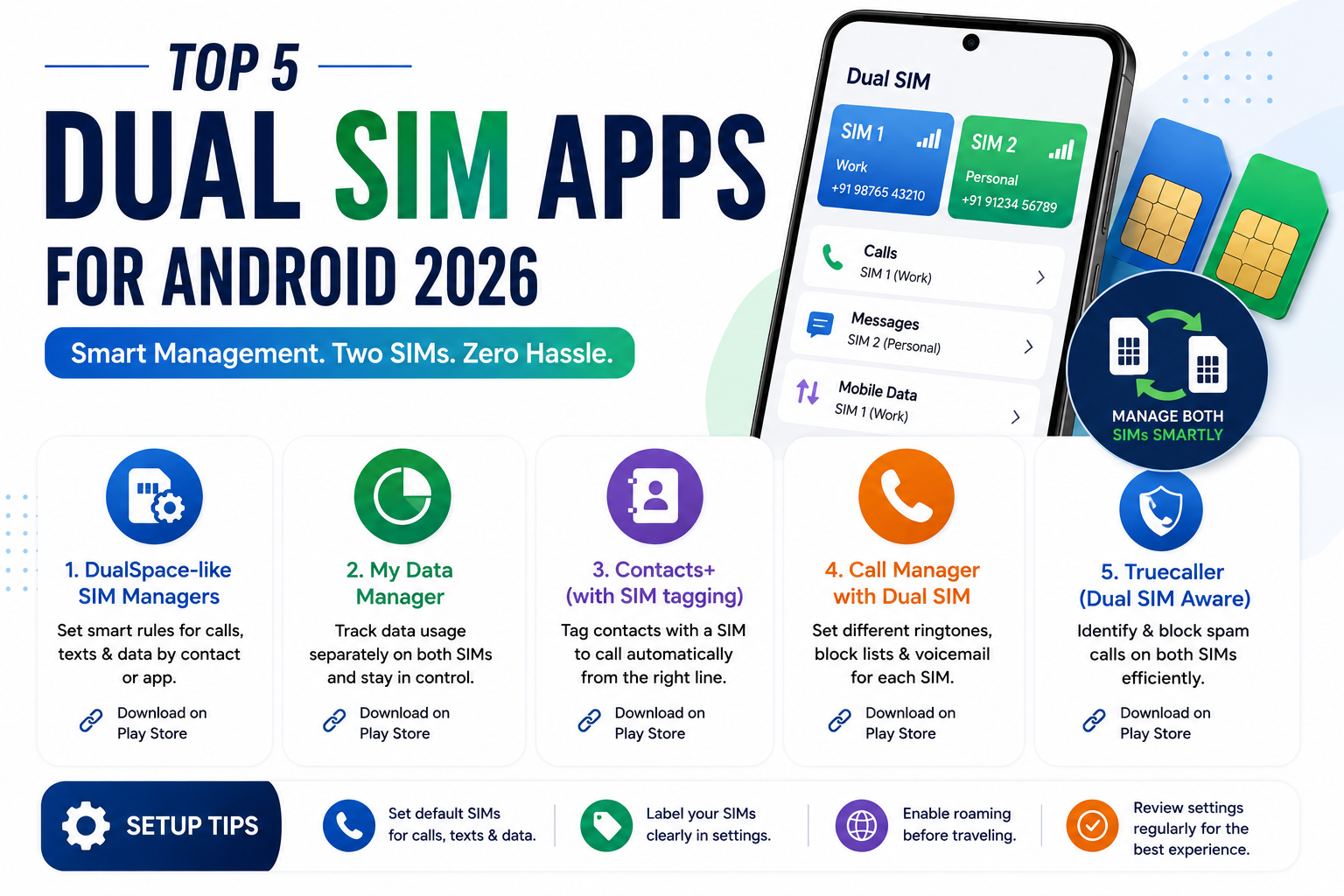
Dual SIM phones have become genuinely common, especially for users separating work and personal numbers or traveling frequently between countries with different local SIMs, but Android’s built-in dual SIM controls can feel clunky for anyone managing calls, texts, and data across two active lines regularly. Dedicated dual SIM management apps fix that by adding clearer visual indicators, smarter default routing rules, and per-SIM notification controls that Android’s stock settings don’t fully cover. Getting this setup right early saves genuine daily frustration, especially for anyone relying on both lines for genuinely different purposes rather than just carrying a spare. Here are five Android apps in 2026 that genuinely simplify life with two active SIM cards.
DualSpace-like SIM Managers
Several dedicated SIM management apps let users set granular default rules for which SIM handles calls, texts, and data by contact or app, going considerably further than Android’s basic default-SIM toggle for specific use cases.
My Data Manager

My Data Manager tracks data usage separately across both SIMs, which genuinely helps users on limited data plans avoid unexpectedly burning through their primary line’s allowance by accidentally defaulting to the wrong SIM for background data.
Contacts+ (with SIM tagging)

Contacts+ lets users tag which SIM should handle calls to specific contacts by default, a genuinely useful feature for anyone who wants work calls routing through a business line automatically without manual SIM switching each time.
Call Manager with Dual SIM Support
Dedicated call management apps with dual SIM awareness let users set separate ringtones, call blocking rules, and voicemail settings per SIM, making it genuinely easier to distinguish between a work call and a personal one before even answering.
Truecaller (dual SIM aware)

Truecaller’s caller identification and spam blocking work across both SIMs, which matters genuinely for anyone whose secondary SIM, often used for online signups or a local travel line, tends to attract more spam calls than a primary number.
Setting Up Dual SIM the Smart Way
Beyond installing a dedicated app, a few basic Android settings adjustments make dual SIM life considerably smoother, setting clear default SIMs for calls, texts, and mobile data individually rather than leaving Android to prompt for a choice every single time, which gets tedious fast for frequent callers. Labeling each SIM clearly in settings, rather than leaving them as generic ‘SIM 1’ and ‘SIM 2,’ also reduces the mental overhead of remembering which line is which when switching between them throughout the day. For frequent travelers specifically, checking that both physical or eSIM lines are properly configured for roaming before departure avoids the frustrating discovery of a dead line right when it’s needed most.
Dual SIM management doesn’t need to stay as clunky as Android’s default settings make it feel, and the apps above each address a specific piece of friction, whether that’s data tracking, contact-based routing, or spam protection across two active numbers. Start with a data tracking app if unexpected data charges have been the main frustration, or a contact-tagging tool if keeping work and personal calls properly separated matters more for your specific situation. Whichever you pick, spend a few minutes reviewing Android’s native dual SIM settings first, some of these apps simply surface controls that were already there but poorly organized, and knowing the baseline helps you judge whether a third-party app is genuinely adding value. A little upfront setup time saves considerable daily hassle once both lines are properly configured.