
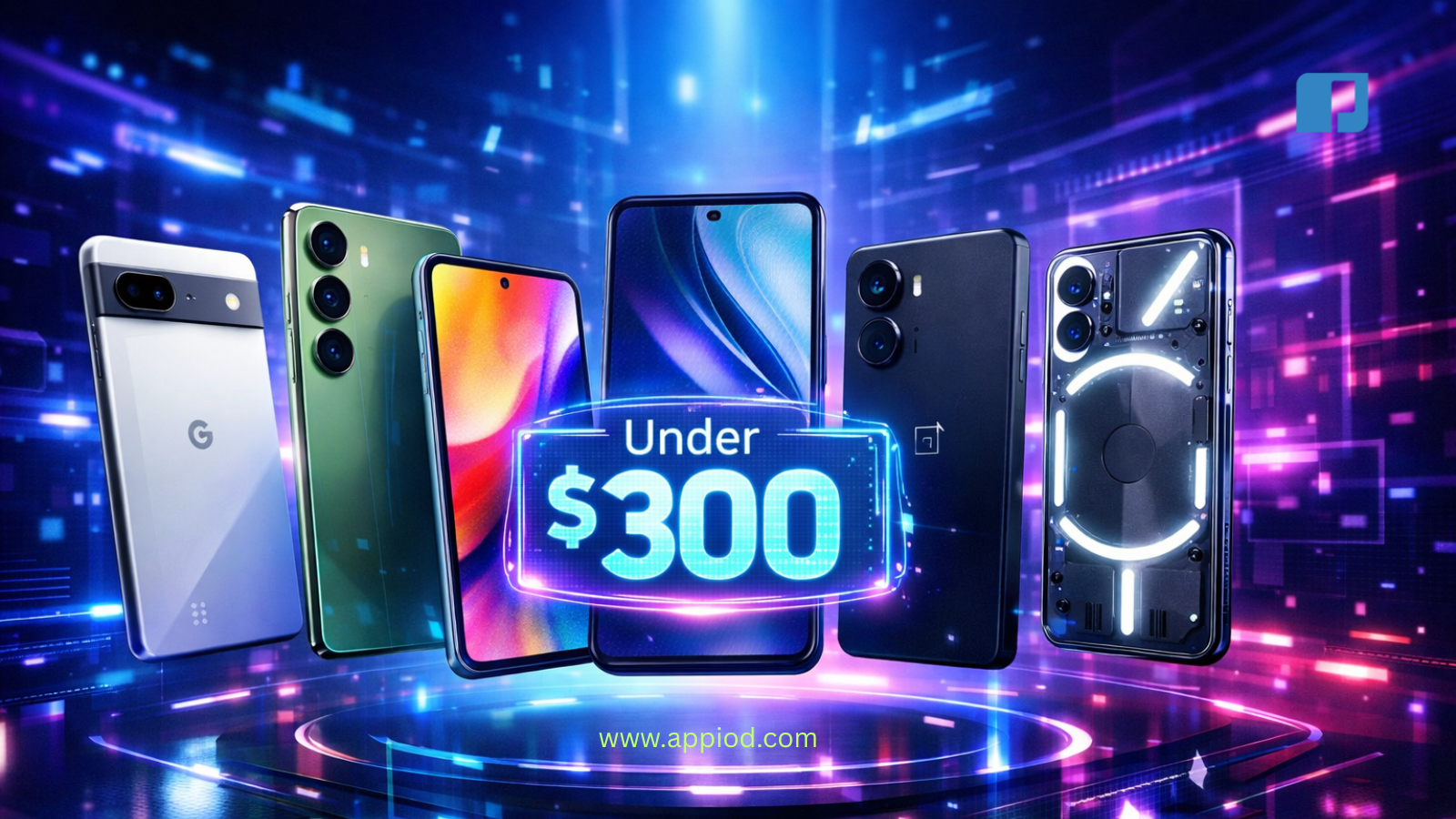
The smartphone market has democratized dramatically, with today’s best budget smartphones under $300 delivering performance and features that flagship devices offered just three years ago. Whether you’re cost-conscious, buying for teenagers, or seeking backup devices, understanding which budget phones deliver genuine value versus those cutting corners in critical areas ensures smart purchasing decisions.
After two decades reviewing smartphones across all price segments and advising thousands on technology purchases, I’ve identified which budget devices punch above their weight class while avoiding common pitfalls that make cheap phones frustrating rather than economical.
The budget smartphone landscape divides into distinct tiers. Phones under $150 make compromises requiring realistic expectations. The $150-$200 range offers balanced experiences for most users. The $200-$300 sweet spot delivers near-flagship experiences without premium pricing. Understanding these tiers prevents disappointment from unrealistic expectations
Why Budget Smartphones Make Sense in 2026
Diminishing Returns on Flagships: Flagship smartphones costing $800-$1,200 offer marginal improvements over $250-$300 alternatives for most users. Photography enthusiasts, mobile gamers, and status-seekers justify premium prices. Average users checking email, browsing social media, and video calling experience negligible differences justifying 3-4x higher costs.
Technology Maturation: Smartphone technology has matured substantially. Five years ago, budget phones offered compromised experiences with laggy performance, poor cameras, and inadequate battery life. Modern budget devices incorporate processors, cameras, and displays that were flagship-tier just 24-36 months earlier.
Carrier Independence: Unlocked budget smartphones eliminate carrier contracts and financing schemes. Purchase devices outright, switch carriers freely, and avoid monthly device payments that ultimately cost more than retail prices
Google Pixel 7a: Best Overall Budget Phone ⭐ 4.9/5
The Google Pixel 7a represents the absolute best budget smartphone under $300 (regularly on sale from $499 MSRP), delivering flagship camera quality and clean Android experience at accessible pricing.
Key Specifications:
- 6.1-inch OLED display (90Hz refresh rate)
- Google Tensor G2 processor
- 8GB RAM, 128GB storage
- 64MP main camera + 13MP ultrawide
- Wireless charging support
- IP67 water resistance
- 5 years of security updates guaranteed
Pricing: $499 MSRP, frequently discounted to $299-$349 during sales
Why It Excels: Google’s computational photography creates images rivaling phones costing double. The camera leverages AI processing to produce stunning photos in challenging lighting conditions where hardware alone fails. Night Sight mode produces usable photos in near-darkness without flash.
The Tensor G2 processor, while not matching Qualcomm’s flagship Snapdragon chips in raw benchmarks, delivers responsive daily performance. Google optimizes Android specifically for Pixel hardware, creating smooth experiences that benchmark numbers don’t capture.
The five-year security update commitment surpasses virtually all competitors, ensuring your budget phone remains secure and receives features years after purchase. This longevity transforms the value proposition dramatically compared to phones abandoned after 1-2 years.
Best For: Photography enthusiasts on budgets, users wanting clean Android without manufacturer bloatware, and those prioritizing long-term software support.
Limitations: No microSD card slot limits storage to 128GB. Gaming performance trails dedicated gaming phones but suffices for casual gaming.
For users interested in optimizing Android performance, Pixel’s clean software provides excellent battery life without aggressive background restrictions
Samsung Galaxy A54 5G: Balanced Mid-Range Champion ⭐ 4.7/5
The Samsung Galaxy A54 5G delivers Samsung’s flagship experience at $449 MSRP, with frequent sales bringing it under $300 during promotional periods.
Key Specifications:
- 6.4-inch Super AMOLED display (120Hz)
- Exynos 1380 processor
- 6GB/8GB RAM, 128GB/256GB storage
- 50MP main + 12MP ultrawide + 5MP macro cameras
- MicroSD card slot (up to 1TB expansion)
- IP67 water resistance
- 4 years OS updates, 5 years security updates
Pricing: $449 MSRP, sales frequently reach $279-$329
Why Users Love It: Samsung’s Super AMOLED display technology creates vibrant, bright screens perfect for media consumption. The 120Hz refresh rate delivers smooth scrolling rivaling flagship experiences at a fraction of the cost.
The microSD card slot provides storage expansion impossible on most competitors. Users can store offline games and media without worrying about running out of space—a significant advantage for media collectors.
Samsung’s One UI software layer adds useful features over stock Android. Features like Secure Folder, Samsung Pay, DeX mode (desktop experience), and extensive customization options appeal to power users wanting more control than stock Android provides.
Best For: Media consumption enthusiasts, users wanting storage expansion, and those preferring feature-rich Android customization.
Limitations: Bloatware from Samsung and sometimes carriers clutters the experience. Performance occasionally stutters during heavy multitasking compared to Pixel’s optimized software
Motorola Moto G Power 5G: Battery Life King ⭐ 4.6/5
The Motorola Moto G Power 5G prioritizes battery life above all else, delivering 2-3 days of typical usage between charges—essential for heavy users and those without consistent charging access.
Key Specifications:
- 6.5-inch IPS LCD display (120Hz)
- MediaTek Dimensity 930 processor
- 6GB RAM, 256GB storage
- 50MP main + 2MP macro cameras
- 5,000mAh battery
- Stock Android with minimal bloatware
- MicroSD card slot
Pricing: $299 MSRP
Battery Performance: The massive 5,000mAh battery combined with efficient processor and optimized software delivers exceptional longevity. Heavy users get full day usage. Moderate users easily achieve 2 days. Light users can stretch to 3 days between charges.
This battery endurance eliminates mid-day charging anxiety and proves essential for travelers, outdoor enthusiasts, and users in areas with unreliable electricity.
Best For: Battery life prioritizers, users without regular charging access, travelers, and outdoor enthusiasts.
Limitations: Camera quality trails Pixel 7a and Galaxy A54 significantly. Display brightness struggles in direct sunlight. Processor performance adequate but not exceptional
OnePlus Nord N30 5G: Speed-Focused Budget Option ⭐ 4.5/5
The OnePlus Nord N30 5G delivers fast performance and rapid charging at $299, appealing to users prioritizing responsiveness over camera quality.
Key Specifications:
- 6.7-inch IPS LCD display (120Hz)
- Snapdragon 695 processor
- 8GB RAM, 128GB storage
- 108MP main + 2MP macro cameras
- 50W fast charging (0-50% in 30 minutes)
- MicroSD card slot
- OxygenOS (Android 13)
Pricing: $299 MSRP
Performance Advantages: OnePlus’s OxygenOS provides one of the fastest Android experiences in budget segment. Animations flow smoothly, apps launch quickly, and multitasking handles effortlessly thanks to generous 8GB RAM allocation.
The 50W fast charging eliminates extended charging sessions. Short charging bursts during morning routines provide sufficient power for entire days. Users accustomed to slow overnight charging appreciate the convenience of rapid top-ups.
Best For: Performance prioritizers, users wanting fast charging, and those switching from older flagship phones expecting responsive experiences.
Limitations: Camera significantly trails competitors despite high megapixel count. Software update commitment shorter than Google and Samsung. Display quality adequate but not exceptional
Nothing Phone (2a): Design-Forward Budget Choice ⭐ 4.6/5
The Nothing Phone (2a) brings distinctive transparent design aesthetic to budget segment at $349, appealing to users valuing unique design alongside solid performance.
Key Specifications:
- 6.7-inch AMOLED display (120Hz)
- MediaTek Dimensity 7200 Pro processor
- 8GB/12GB RAM, 128GB/256GB storage
- 50MP main + 50MP ultrawide cameras
- Glyph Interface LED notification system
- Nothing OS (clean Android)
- 45W fast charging
Pricing: $349 for 8GB/128GB, $399 for 12GB/256GB
Unique Selling Points: Nothing’s transparent design creates distinctive aesthetic differentiating it from generic budget phones. The Glyph Interface uses LED lights on the back as customizable notification system, ringtone visualizer, and charging indicator.
The Nothing OS provides clean, bloat-free Android with thoughtful customizations enhancing usability without overwhelming complexity. The company commits to 3 OS updates and 4 years security patches—respectable for budget segment.
Best For: Design-conscious users, those wanting unique phone aesthetics, and users appreciating clean software with minimal bloatware.
Limitations: No IP rating for water resistance. Camera performance good but not exceptional. Limited availability in some markets
Key Considerations for Budget Smartphones Under $300
Software Updates Matter: Budget phones often receive abbreviated update schedules. Prioritize manufacturers committing to 3+ years of updates ensuring security and feature improvements throughout device lifecycle.
Display Technology: AMOLED displays (Pixel 7a, Galaxy A54, Nothing Phone 2a) provide superior contrast and colors compared to IPS LCD panels (Moto G Power, OnePlus Nord N30). Consider media consumption habits when choosing display technology.
Camera Priorities: Computational photography matters more than megapixel counts. Google Pixel’s 64MP camera outperforms many 108MP competitors through superior processing algorithms.
Storage Expansion: MicroSD card slots provide affordable storage expansion. Without expandable storage, ensure base model offers sufficient capacity for your usage patterns.
5G Connectivity: All listed options include 5G support. This future-proofs devices as carriers phase out 3G and 4G networks, ensuring compatibility for 3-5 years
Making the Right Choice
Choose Google Pixel 7a if: Camera quality represents your top priority and you want the cleanest Android experience with longest update commitment.
Choose Samsung Galaxy A54 if: You want beautiful AMOLED display, storage expansion, and feature-rich software with extensive customization options.
Choose Moto G Power if: Battery life matters most and you need device lasting 2-3 days between charges without compromising performance significantly.
Choose OnePlus Nord N30 if: Fast performance and rapid charging take priority over camera quality and you want responsive daily experience.
Choose Nothing Phone (2a) if: 0Unique design aesthetic appeals to you and you want clean software on distinctive hardware
The Bottom Line on Best Budget Smartphones Under $300
The best budget smartphones under $300 prove you don’t need flagship pricing for excellent smartphone experiences. Whether prioritizing camera quality (Pixel 7a), display quality (Galaxy A54), battery life (Moto G Power), performance (OnePlus Nord N30), or design (Nothing Phone 2a), exceptional options exist for every preference.
Research when phones go on sale, as manufacturers frequently discount previous-generation flagships into budget territory during promotional periods. Last year’s $699 flagship at $299 often provides better value than current-year budget models.
Consider your actual usage patterns honestly. Most users overestimate their needs, paying for features they rarely use. Budget smartphones liberate funds for other priorities while delivering experiences that 95% of users find completely satisfactory