
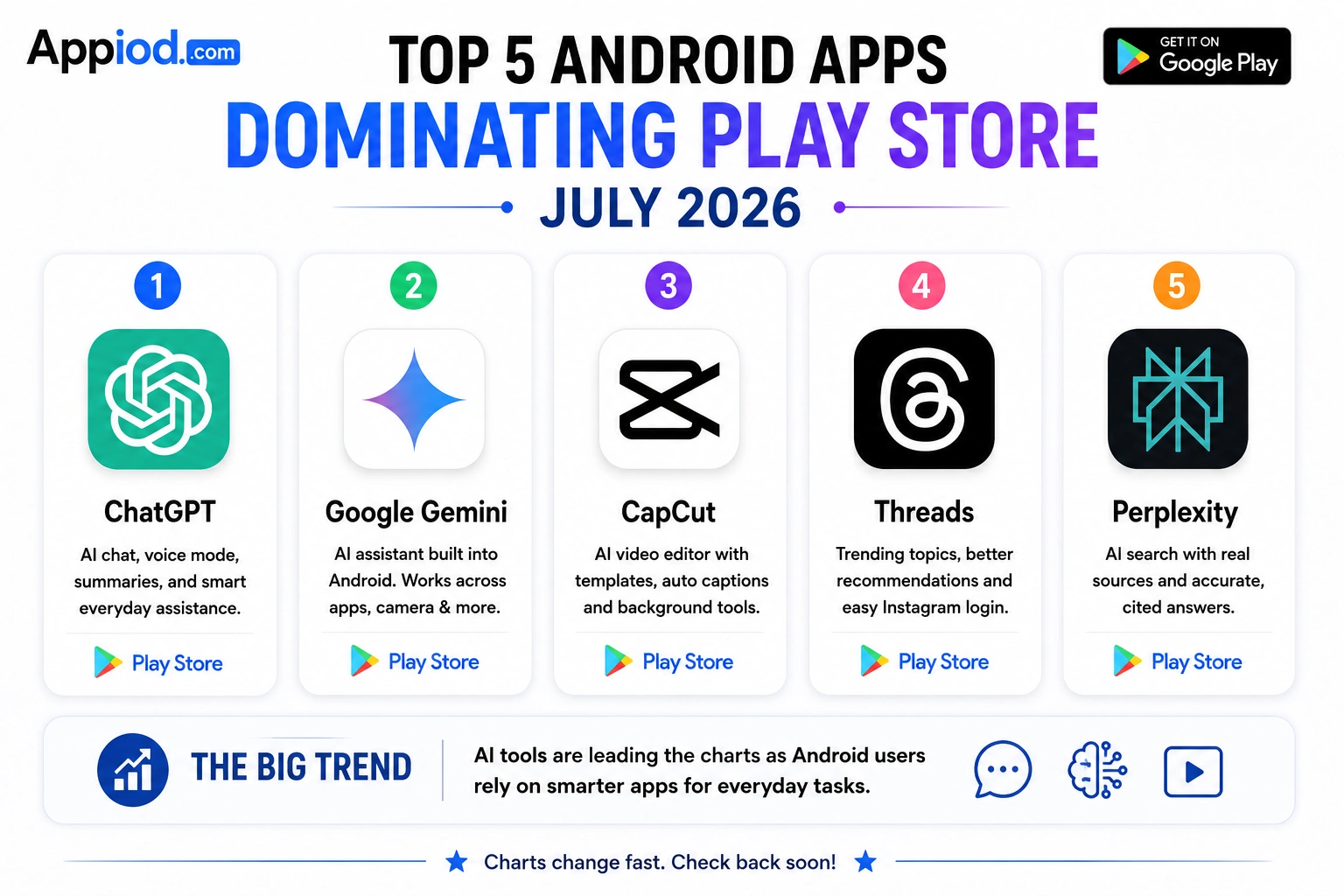
Every month brings a slightly different mix of apps climbing the Play Store charts, shaped by new feature launches, viral trends, and shifting user habits that are often impossible to predict in advance. Watching which apps break into the top charts is a useful signal of where user attention is actually heading, well before it shows up in broader tech headlines. Here’s what’s dominating downloads on Android in July 2026, and a quick look at why each one is climbing so fast right now, from AI assistants to short-form video editing tools.
ChatGPT
ChatGPT continues to hold a top spot on the charts, driven largely by its expanding voice mode and deeper integration with everyday tasks like scheduling, document summarization, and quick research directly from the mobile app. Frequent model updates keep pulling in users curious about new capabilities, and its growing plugin-like integrations with other apps have made it feel less like a standalone chatbot and more like a daily utility.
Google Gemini
Gemini keeps climbing thanks to its tight integration across Android’s system-level features, letting users trigger AI actions directly from the home screen, camera, and other Google apps without switching context or opening a separate window. Its bundling with several Android flagship devices as a default assistant replacement has also given it a distribution advantage most competitors simply don’t have.
CapCut
CapCut’s mix of free AI editing templates and quick export options keeps it dominant among creators making short-form video for social platforms, especially as trends shift on a near-weekly basis and creators need to turn around edits fast. Its auto-captioning and background removal tools have become genuinely competitive with paid desktop editors, which is a big part of why it keeps climbing.
Threads
Threads has seen a fresh wave of downloads this month tied to feature updates around trending topics and improved recommendation algorithms that are pulling users over from other text-based platforms. Its tighter integration with Instagram accounts has also lowered the barrier to entry, letting users join with almost no setup friction at all.
Perplexity
Perplexity is climbing steadily as more users treat it as a direct alternative to traditional search, valuing its cited, straight-to-the-point answers over scrolling through multiple links and ad-heavy result pages. Its focus on transparency, showing exactly which sources an answer is pulled from, has helped it build trust with users who are wary of AI-generated misinformation.
What This Tells Us About Android Usage in 2026
Looking past the individual apps, the broader trend is that Android users are increasingly reaching for AI-native tools as a first stop rather than a novelty add-on, whether that’s asking a question, editing a video, or catching up on trending topics. This shift is also changing what “utility app” even means, apps that used to serve a single narrow function are now expected to fold in some form of AI assistance just to stay competitive on the charts. Developers building new Android apps in 2026 should take this seriously, even a lightweight AI feature, done well, can meaningfully improve retention and word-of-mouth growth compared to a purely traditional utility app competing in an already saturated category.
Charts like these shift fast, and it’s rarely the same five apps two months in a row, but the underlying pattern is clear: AI-native tools are consistently what’s pulling the biggest download numbers on Android right now, ahead of games and traditional utility apps. Worth checking back in a few weeks to see how much the list has already changed, since a single viral feature update or trending challenge can reshuffle these rankings within days. For now, if you haven’t tried the AI assistants on this list yet, they’re worth a look simply because of how much daily functionality they’re absorbing from apps that used to require separate downloads entirely.